
Inside Overdare: Krafton’s Vision for a Blockchain-Powered Creator Metaverse
A deep dive into the tech stack, UX flows, and smart contract logic behind Overdare’s Web3 gaming infrastructure.

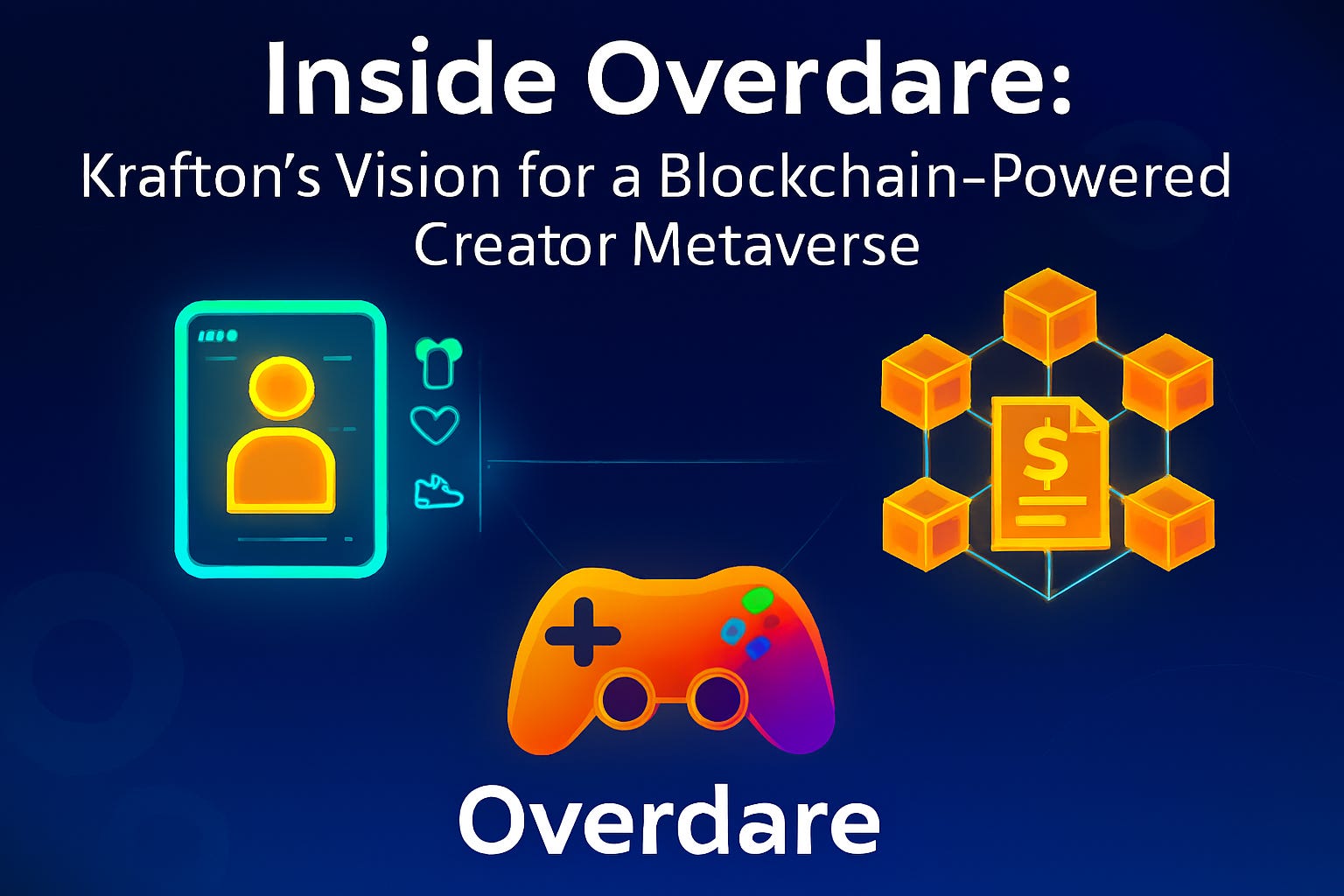
Krafton, best known for PUBG: Battlegrounds, has long dominated the competitive gaming space. But with Overdare, it’s stepping into a new arena one where players aren’t just consumers, they’re creators, entrepreneurs, and co-architects of the experience.
Originally announced as Project Migaloo, the platform was rebranded to Overdare in 2023 a name that reflects boldness, risk-taking, and creative freedom. It’s a joint venture with NAVER Z, the team behind ZEPETO, one of Asia’s largest avatar-based social platforms. This partnership blends Krafton’s game development expertise with NAVER Z’s metaverse and UGC (user-generated content) know-how.
So what is Overdare, really?
It’s a mobile-first platform built on Unreal Engine 5, designed for users to create high-quality games across genres action RPGs, sports, shooters, and more.
It uses generative AI to help creators build faster, smarter, and with less friction.
It introduces a Create-to-Earn (C2E) model, where users can monetize their content through blockchain-backed ownership and royalties.
This isn’t just a metaverse experiment. It’s Krafton’s answer to a growing demand for creator economies where players want to build, own, and earn from their time and talent.
The rebrand also signals a shift in audience. While PUBG catered to competitive gamers, Overdare is designed for builders, storytellers, and social players those who want to shape the world, not just survive in it.
In short, Krafton is no longer just making games. It’s building infrastructure for the next generation of digital creators.
What Powers Overdare: A Look at the Tech Behind the Metaverse
Overdare isn’t just a creative playground, it’s a full-stack platform built to support ownership, monetization, and scale. Krafton didn’t just add blockchain to a game. It built an ecosystem where every interaction, whether it’s creating an avatar, selling a skin, or launching a mini-game, is backed by smart infrastructure.
Here’s how it all fits together:
🔗 Blockchain Layer: Ownership That Can’t Be Faked
At the foundation is a blockchain layer, likely Ethereum or a custom Layer 1, used to record who owns what. Whether it’s a digital sword, a game level, or a creator badge, ownership is logged on-chain. That means it’s secure, transparent, and transferable.
No centralized servers deciding who owns what
No risk of losing assets if the game shuts down
Players and creators can trade, sell, or showcase their work across platforms
📜 Smart Contracts: Automating Trust
Smart contracts are like digital agreements that run automatically. In Overdare, they handle:
Royalties for creators
Payments for in-game purchases
Resale logic for NFTs and digital assets
This means creators don’t need to chase down payments or rely on platform promises. The code enforces the rules.
🎮 Frontend & Backend: Built for Immersion and Scale
Overdare uses Unreal Engine 5 for high-quality visuals and smooth gameplay. On the backend, Krafton likely uses a mix of cloud infrastructure and orchestration tools to manage game logic, user data, and asset syncing.
The frontend feels like a AAA game
The backend quietly handles wallet connections, asset transfers, and compliance
Players don’t need to understand blockchain. They just play. The tech stays invisible.
🔐 Identity & Wallets: Flexible Access
Users can log in with traditional accounts or connect crypto wallets. This dual system makes Overdare inclusive:
Casual players can use email or social logins
Power users and creators can connect wallets to manage assets and earnings
It’s secure, flexible, and future-ready.
Role-Aware Design: How Overdare Adapts to Players, Creators, and Moderators
One of Overdare’s most strategic design choices is its role-aware architecture. Instead of building a one-size-fits-all interface, Krafton designed Overdare to adapt to the needs of different users whether they’re casual players, ambitious creators, or platform moderators.
This isn’t just good UX. It’s a way to scale complexity without making the experience feel complicated.
🎮 For Players: Seamless Gameplay, Real Ownership
Players enter Overdare like they would any mobile game no crypto knowledge required. They can:
Explore games built by other users
Customize avatars and environments
Earn and own digital items that are recorded on-chain
The blockchain layer stays invisible. Players don’t need to manage wallets or understand smart contracts. They just play and their progress, purchases, and achievements are securely stored and transferable.
🛠️ For Creators: Tools to Build, Publish, and Earn
Creators get access to a full suite of modular tools:
Game editors powered by Unreal Engine
Asset libraries and scripting engines
Monetization modules for selling items or earning royalties
They can build solo or collaborate, publish instantly, and earn through Overdare’s Create-to-Earn model. Smart contracts handle payments and royalties automatically, so creators focus on content not admin.
🧑⚖️ For Moderators: Governance Without Bottlenecks
Moderators play a critical role in keeping the platform safe and fair. Overdare equips them with:
AI-assisted moderation dashboards
Dispute resolution tools
Governance settings that can be customized or community-driven
Whether it’s flagging inappropriate content or managing creator disputes, moderators have the tools to act quickly and transparently without slowing down the ecosystem.
Lifecycle Automation: How Overdare Streamlines Creation, Ownership, and Transactions
In traditional games, creating and selling content is messy. You need approvals, manual uploads, and third-party platforms. Overdare flips that model by automating the entire lifecycle from creation to monetization using smart contracts and blockchain.
How It Works
A creator builds a game level, avatar, or item using Overdare’s tools.
They mint it as an NFT meaning it’s logged on-chain and can be owned or sold.
Smart contracts handle payments, royalties, and resale logic automatically.
If the item is resold, the original creator still earns a cut no chasing invoices or platform fees.
This automation makes the platform scalable. It reduces friction, protects creators, and ensures every transaction is secure and traceable.
Why It Matters
Creators get paid fairly and instantly.
Players can trust what they’re buying.
Moderators can audit activity without manual reviews.
It’s not just efficient it’s empowering. Overdare turns creative output into digital assets that move, earn, and evolve on their own.
Lessons for Builders: What Web2 Studios Can Learn from Overdare
Overdare isn’t just a tech experiment. It’s a strategic playbook for studios looking to evolve beyond traditional game publishing. Here’s what stands out:
Build for Creators, Not Just Consumers
Give users tools to create, not just play. Overdare’s success hinges on empowering builders—and making it easy for them to earn.
Make Blockchain Invisible but Useful
Players don’t need to see the tech. They just need smoother experiences, secure ownership, and fair transactions. Overdare nails this balance.
Design for Scale Across Devices and Regions
Modular architecture lets Overdare adapt to different laws, devices, and user types. That’s how you build global platforms without constant rewrites.
Use Smart Contracts to Enforce Trust
Instead of relying on manual enforcement, Overdare uses code to guarantee royalties, ownership, and compliance. It’s trust by design.
If you’re exploring how emerging tech can elevate your customer experience or reinvent your business model, let’s connect—I’d love to help you turn bold ideas into strategic moves.